Hail Damage & Storm Response
After a major hailstorm, most people step outside, look around at the obvious damage—dented cars, broken branches—and assume their roof is fine because they can’t see anything wrong from the ground. That assumption costs property owners thousands of dollars every year.
The truth is hail damage to a roof is often invisible from street level. It takes a trained eye, boots on the roof, and knowledge of what to look for to find the impact points, membrane stress, and granule loss that will quietly turn into leaks, mold, and structural problems over the coming months.
At Grell Roofing, LLC, we’ve been inspecting and repairing hail-damaged roofs for nearly four decades. Here’s what every homeowner and property manager needs to know after a significant hail event.
Why Hail Size Matters More Than You Think
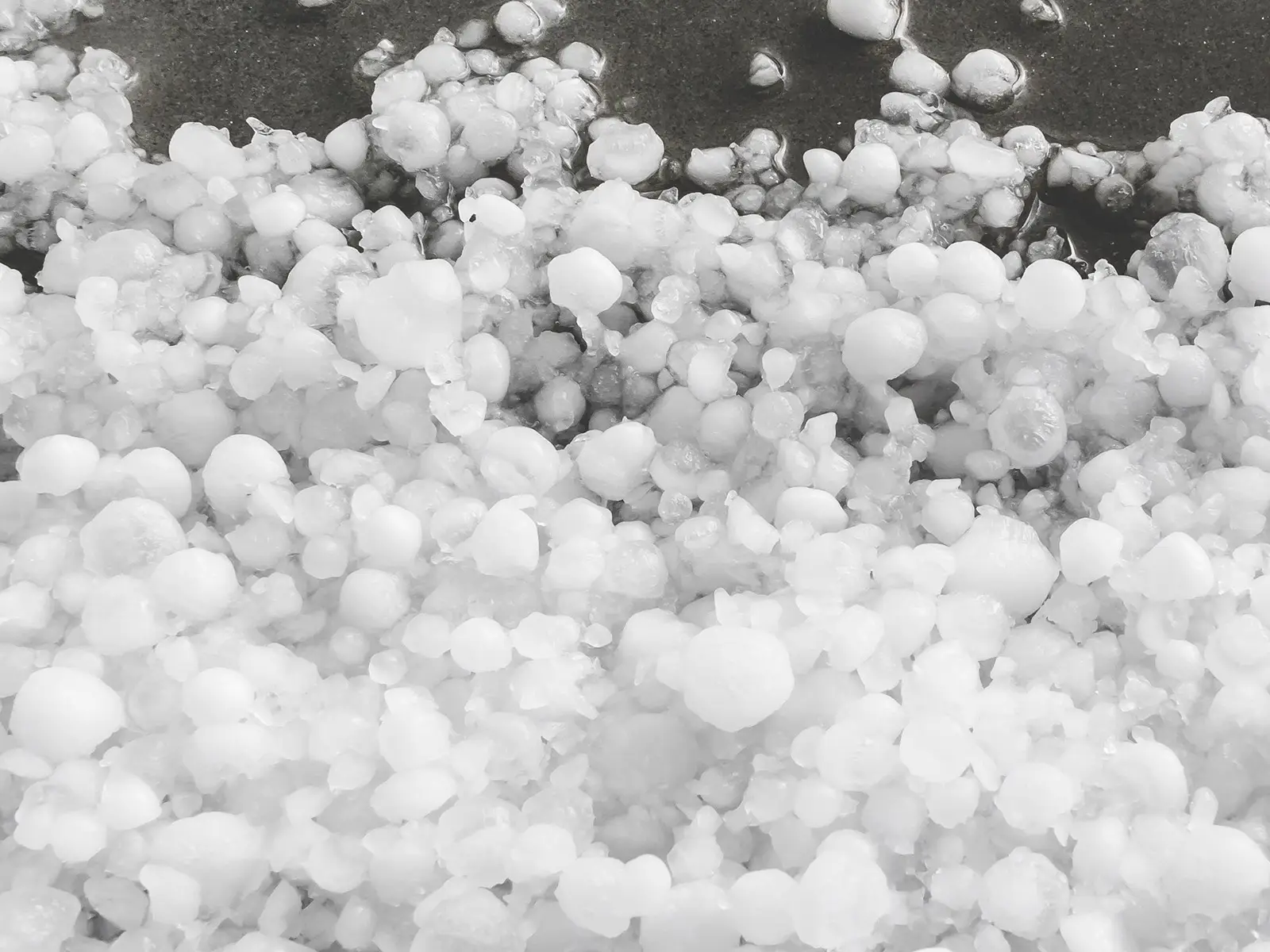
Not all hail causes the same damage. Pea-sized hail (¼ inch) rarely does meaningful harm to a well-maintained roof. But once hail reaches golf-ball size (roughly 1.75 inches in diameter) the physics change entirely. At that size, falling at storm velocity, hailstones can:
- Crack, bruise, or strip the granules from asphalt shingles, exposing the asphalt layer beneath to UV degradation and moisture
- Puncture or split flat roof membranes (TPO, EPDM, PVC), creating immediate water infiltration pathways that may not show up as interior leaks for weeks
- Dent and displace metal flashing around vents, skylights, and chimneys, opening gaps at the most vulnerable points of your roof
- Damage gutters, soffit, fascia, and skylights, affecting how water drains off and away from your structure
The deceptive part: even significant hail damage often looks like nothing more than a few small dents or dark spots. Without knowing what you’re looking for, it’s easy to dismiss, and easy to miss the insurance claim window entirely.
Signs Your Roof May Have Hail Damage
While a professional inspection is the only reliable way to assess the full picture, here are things you can check yourself from the ground or in your attic:
- Dented gutters, downspouts, or AC units: if these metal surfaces show impact marks, your roofing materials almost certainly took similar hits
- Granules in your gutters or at downspout discharge points: asphalt shingle granules washing off after a storm is a classic indicator
- Cracked, dislodged, or visibly bruised shingles: large hail can crack shingles outright or leave soft, dark impact spots
- Water stains on interior ceilings or walls: if leaking has already begun, the damage may be more extensive than a simple repair
- Damaged or cracked vent covers, skylight glazing, or chimney caps: these are among the most vulnerable elements in a hail event
If you check two or more of these boxes, don’t wait. Schedule a professional inspection before the next storm rolls through—because the next one may complicate your insurance claim.
Watch Out for Storm Chasers
After every major hailstorm, out-of-town roofing crews appear overnight, going door to door with fast-talk and lowball offers. The Better Business Bureau consistently warns homeowners about this pattern. Here’s how to protect yourself:
- Don’t sign anything on the spot; trustworthy contractors will still be available when you’ve had time to do your homework
- Verify that any contractor you consider is licensed, bonded, and insured; and ask for proof
- Check their BBB rating and Google reviews; look for a history of completed projects, not just a website
- Get at least two or three written, itemized estimates before deciding
- Never pay the full project cost upfront
Grell Roofing is fully licensed, bonded, and insured, with an A+ BBB rating and verified customer reviews going back decades. We don’t chase storms—we build long-term relationships with the properties and people we work with.
How the Hail Damage Repair Process Works
Filing an insurance claim and getting your roof properly repaired doesn’t have to be stressful. Here’s how we walk customers through it:
- Free Professional Roof Inspection: A certified Grell Roofing specialist inspects your entire roof, documents all damage with detailed photos, and provides a written inspection report at no cost and no obligation.
- Insurance Claim Support: We help you understand what your policy covers, guide you through the filing process, and can meet with your insurance adjuster on-site to make sure the full scope of damage is captured.
- Written Repair Estimate: Before any work begins, you’ll have a fully itemized written estimate. No surprises, no pressure. You know exactly what’s happening and what it costs.
- Repairs with Quality Materials: We use manufacturer-certified materials, including Duro-Last TPO systems for commercial flat roofing, and back every job with both labor and material warranties.
- Final Walkthrough: Before we leave, we walk the completed work with you. We stand behind every project we complete.
Don’t Wait on Your Insurance Claim
This is the detail that catches people off guard most often: most homeowners and commercial property insurance policies have a strict filing window, often one year from the date of the storm, and sometimes as little as six months. Once that window closes, your claim is gone regardless of how clear the damage is.
The sooner you get a documented professional inspection, the stronger your claim. If another storm hits before you’ve filed, it becomes much harder to tie the original damage to the original event. Act within the first few days whenever possible.
Frequently Asked Questions
How soon after a hailstorm should I have my roof inspected? As soon as possible, ideally within 24 to 72 hours. Prompt inspection protects your insurance claim, prevents additional water damage, and ties your documentation clearly to the storm event.
Will my insurance cover hail damage? Most standard homeowners and commercial property policies do cover hail damage, minus your deductible. The key is filing before your claim window closes and having solid documentation, which our free inspection provides.
How do I know if I need a repair or a full replacement? It depends on the extent and distribution of the damage. Isolated damage can often be repaired. If hail has compromised a large portion of the roof surface, especially on an older roof, replacement may actually be more cost-effective long-term. Our inspectors give you an honest assessment of both options, with no pressure either way.
What roof types can you repair after hail damage? All of them. We work on TPO, EPDM, PVC flat roofing, asphalt shingles, metal roofing, and low-slope systems. We are a certified Duro-Last applicator with deep expertise in commercial flat roof systems.
Do you offer emergency repairs? Yes. If your roof is actively leaking or structurally compromised, call us immediately at 800.208.9693. We provide emergency tarping and temporary repairs to protect your property while a full plan is put together.
About Grell Roofing, LLC
Grell Roofing is a family-owned, fully licensed, bonded, and insured roofing contractor with nearly four decades of experience and over 12 million square feet of roofing installed. We serve residential and commercial clients nationwide, with deep expertise in flat roofing, TPO systems, asphalt shingles, and storm damage repair. Call us at 800.208.9693 or visit grell.pro/estimate to request your free estimate.